Call the Midwives! It’s not just a part of history.

I actually haven’t seen even a full episode of the TV series “Call the Midwives”, so I can’t say much about it one way or another. But with my due date literally only days away (4 – to be exact), midwives, and calling them, have been very much on my mind. I have some great ones, and they also assisted with my last two deliveries. (I’ll share some more on that in a minute)

Historically, all you had was midwives. The term midwife is derived from Middle English: midwyf literally “with-woman”, i.e. “the woman with (the mother at birth), the woman assisting” (in Middle English and Old English, mid = “with”, wīf = “woman”). It’s only been the last hundred years that doctors have become the main facilitators of birth in North America. In many other countries midwives are often still the primary birth attendance, equaling less intervention and ofttimes (in first world countries) lower maternal death rate .

I grew up in a community which had many older occupants who’d been delivered by the same midwife. The woman was a legend. Thousands of live births with no moralities of mother or child.

I could talk for hours about why I love midwives and why I think that for a healthy pregnancy and birth they are the best options, but instead I’ll just share my experiences.

Baby # 1:

Loving control of myself and my life as much as I do, I knew I wanted midwives before I even got married. My new husband, figuring it was my body and respecting my opinion, kept his mouth shut though he remained uncertain. About nine months after our wedding, I found myself about nine months pregnant. The pregnancy up to this point had been ideal and I was sold on the idea of a home-birth with midwives. Unfortunately at 38 weeks my usually very low blood pressure decided to play on the other side of the spectrum.

By 39 weeks I took a drive with my midwife to the hospital to have it monitored. By the end of our two hour session, we called an OB in to consult with. His opinion (or at least, the one he stated) was immediate induction. My blood pressure was pretty high, but I was confident not much was going to change in the next hour or so. Having a home birth planed, I wasn’t packed for the hospital and I hadn’t eaten since breakfast (it was now after four pm). I said I wanted to go home, pack, eat supper and then come back for the induction. The OB didn’t like this idea and tried to scare us into staying, naming every possible awful outcome from taking the extra hour to prepare myself. I consulted with my midwife, who, while not “disagreeing” with anything the OB said, painted a more realistic picture of where we were at and our reasonable options.

We went home.

About two hours later we got back to the hospital and I was induced with a small gel insert (prostaglandins) to see if that would get us started (I was two cm). A nurse helping out paused long enough to tell me I should get the epidural right away because of my blood-pressure, which was sure to rise in labor. I just smiled and said, “No, thank you.” Honestly the thought of an epidural and the complications that often arise from its use threatened to raise my blood-pressure more than pain. (After the birth we told one of my midwives what the nurse told us and she got quite upset that such was suggested as a “need”.)

My body reacted well to the mild induction and by 10:30 pm my body took over on it’s own and the gel was removed. Minute and a half contractions, a minute and a half apart made for a lovely wave across the monitor and my midwife again took over our care. Thankfully! Every hour or so she would hook me up to the machines to make sure all was well with BP and baby, but other than that I could spend my time walking the halls (I couldn’t stand to lay down for long) or hang out in the shower (hot water was just as good as any epidural for keeping that BP down and the pain manageable.)

Around 1 am I finally breached 4 cm and could move up to a labor and delivery room. My water broke half way to the stairs (Yep, I chose to take the stairs to help baby move down). Once upstairs, the birthing ball became my friend (I even fell asleep on it a couple times between contractions and hubby had to catch me!) and the monitor — my mortal enemy. The feel of those bands around my already pained uterus was just too much. Thankfully my midwife didn’t say much when she came back to find it without me as I’d escaped back into the shower. 🙂

By 4 am I stared feeling “pushy” and the midwife checked to find I was fully dilated. Yay! Except, wow, I hated pushing. The intensity of the sensation, and the need of my body to take over complete control was hard on me (I like to be the one in control!) Finding the most comfortable position was the next fun part. I tried several before ending up on my hands and knees, draped over the raised head of the bed. An hour later (though it honestly felt like a half-hour thanks to breaks between contractions), my baby was guided to the bed and I turned around to take him in my arms. Perfect. It was 5:35 am.101_0165

I’d like to say that was it, but probably due to the BP and/or induction, the placenta didn’t do it’s part and the full medical team was called in to keep me from bleeding to death. I’d never argue that Doctors and modern medicine and technology doesn’t have a place.

My midwife care continued for the six weeks after the baby, them coming to my home often in the first few days to check up on me and baby. Their care was professional, caring, well integrated, but most of all, about me and my baby and what I wanted.

Stay tuned for Birth story #2- a natural water-birth…in the hospital.


Guest Author: Hallee Bridgeman – Bringing WWII to Life!

My love of the WWII era started in my early teens when I watched Casablanca for the first time. I became obsessed with magazines and newspaper articles from the 1940’s, with the fashion, with the lifestyles. Even now I enjoy looking look through old books and pictures and see how kitchens were set up and how homes were run.HAB_2014a

I’ve been writing for about 15 years now. My interests lay in suspense and romance, so writing romantic suspense just became a no-brainer for me. I can sit down at the keyboard and just let my imagination run. I enjoy coming up with scenarios and intricate plots that twist and turn and keep readers completely breathless from one chapter to the next.

When I started writing, I started researching writing a series set in Europe in World War II. So, while I was busy writing my contemporary romantic suspense titles, I spent any down time I had researching the 1930’s-1950’s Europe and America. When I finally reached a point in my work schedule to start writing my book, I sat down at my keyboard and expected to have the words just flow through me like they always have only to find out – they wouldn’t.

It wasn’t that I didn’t have a plot: espionage, female heroines, inspired by real women. I had the plot. What I didn’t have was the knowledge. I had no idea how much I didn’t know until I realized I didn’t know it. I couldn’t even begin because as much as I could picture my character in my head, I couldn’t be certain that what I had her wearing was something that she would actually wear. All of those years of research, looking into espionage tactics and military warfare had done nothing to prepare me to write about the most important thing in any novel: the characters.

What kind of school would she have gone to? What kind of shoes would he wear? What would she eat for dinner on a Friday night? How would they go from their apartment to that play?

As much as I had spent most of my life in love with that era, the little day-to-day things that help characters come to life in a story completely escaped me. I had to go back into research with a fresh eye for what was important and what details I needed to learn. Loving the era like I do, that research was fun and easy for me.

When I finally sat down again to write the series, with all of the proper research under my belt, it came much quicker and easier.

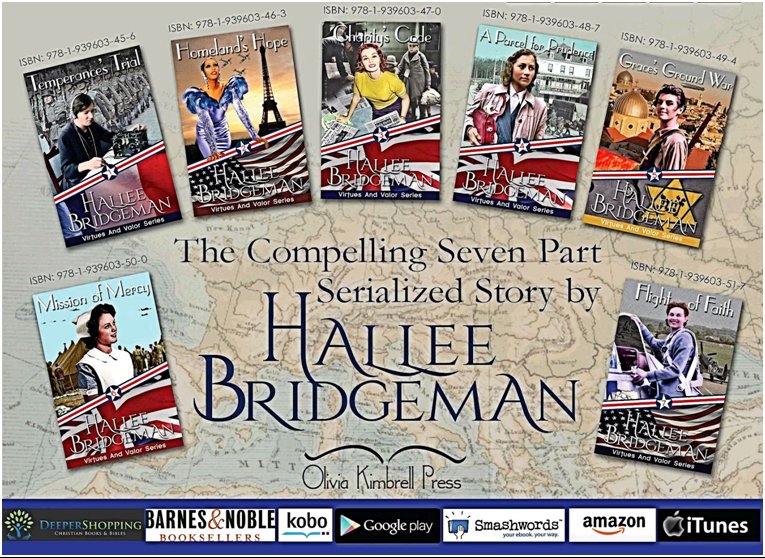
Tomorrow, the final episode in my Virtues and Valor series releases. Every book in the 7-part series was inspired by a different heroine in WWII history; every woman on the covers did something remarkable in the war. It has been an amazing journey to research and to dig into their stories.

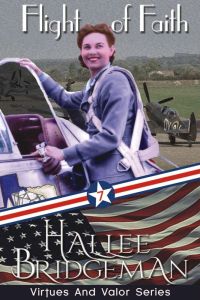
7FlightOfFaith_800Flight of Faith: HELEN MULBERRY, the youngest child and only daughter of a wealthy Texas oil tycoon, has always had her every wish granted immediately. When the Germans march into France, no one denies her request to fly her plane to England and help free up a male pilot for combat. Her father’s influence opens doors, and 19 year old Helen joins the Virtues team.

Now under the code-name FAITH, she flies between Britain and France, transporting passengers, supplies, or performing reconnaissance. The Nazis guard their skies with vigor, and Helen learns to fly in combat, land in a field with no lights, and evade the anti-aircraft fire. She masterfully takes on each mission, despite the perceptions and chauvinistic attitudes of many of the male pilots.

Shot down over France during the mission to rescue the agent code named TEMPERANCE from the clutches of the Gestapo, Helen must make her way through enemy territory with no language skills and somehow come through with a means to get her team back to Britain. Can she save them, or will they all find that they have no way out?

Virtues and Valor Series:
In 1941 Great Britain a special war department assembles an experimental and exclusively female cohort of combat operatives. Four willing spies, a wireless radio operator, an ingenious code breaker, and a fearless pilot are each hand-picked, recruited, and trained to initiate a daring mission in Occupied France. As plans are laid to engineer the largest prison break of Allied POWs in history, the Nazis capture the Virtues’ radio operator. It will take the cohesive teamwork of the rest of the women to save her life before Berlin breaks her and brings the force of the Third Reich to bear.

Some find love, some find vengeance, and some discover the kind of strength that lives in the human heart when all they can do is rely on each other and their shared belief. Courage, faith, and valor intersect but, in the end, one pays the ultimate price.

virtues


Hallee online:             Website        Twitter        Facebook        Google+     Amazon

Historical Romance for the Modern Reader

The ideal modern romance (what every girl wants) entails attraction, dozens of dates, “hanging out” until you really know them, becoming their “best friend”, etc…etc… Often the process of making sure someone is the “right one”, or your “soul-mate”, takes years.

Sometime readers shake their heads that a romance can “happen” and the happy couple are ready to bind themselves together for the rest of their lives after only a few months…or weeks…or days! It’s as unbelievable as the heroine off  Disney’s “Enchanted” being sure of her “prince charming” and “true love” after only one day…or a brief meeting.

enchanted-amy-adams-and-james-marsden-foreground-patrick-dempsey-and-rachel-covey-background

But what can I say? Expectations where different “back then”.

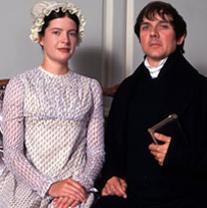
For the sake of ease, lets look at one era. Regency. Turning to our expert in the field, Jane Austen herself, what do we see? (Not counting Persuasion 😉 ) In Pride and Prejudice, Charlotte’s example probably rings pretty true. She knew almost nothing of Mr Collins, but he could provide a good life for her and seemed the logical choice. After only a few public meetings and a short interlude, she agreed to be his wife.Pride-and-Prejudice-1995-pride-and-prejudice-1995-6196003-207-208

But that wasn’t very romantic and she didn’t actually love him, so lets look at Jane instead.

Jane was truly in love with Mr. Bingley. But then, what wasn’t to love? And she’d had ample time to judge his character. Several social gatherings, and then all those days she was sick in his house (OK, that worked out better for Elisabeth than Jane). Unfortunately Bingley was compelled to leave for London and Jane didn’t see him much before he finally proposed. But that didn’t matter. She knew him to be a good man who would treat her kindly, provide well for her, and she was attracted to him.pnp-2

But let’s dig deeper here. What about Elisabeth. By far the pickiest of the sisters, so a good thing she had plenty of social gatherings to analyse Mr Darcy, a nice stay with the Bingleys to engage in the rigors of proper conversation (only she still didn’t like him), several meetings at his aunt’s (where it all fell apart), and then restoration during her short stay near Pemberley. It helped that he was wealthy and everyone (except Wickham) said such wonderful things about him. How could she not fall deeply and madly in love with him? The question remains, how much time did they really have with each other before they were decided? PnP 1

The purpose of this examination is not to induce you to change your expectations when seeking the one you plan to spend the rest of your life with (please make sure you love them, respect them, and are their best friend), but to point out that when reading a historical romance, while we will strive to make their falling in love fulfilling and realistic…they might rush into marriage a year or two quicker then you would have.

Though, I suppose there are still great parallels between the mail-order bride…and your internet sweetheart 😉


The Fight Traditional Marriage is a Fight for the Rights of Children

Here’s a tidbit of history for everyone. Marriage used to be a union exclusively between a man and a woman…and with good reason. scan_pic0743

Nowadays everyone so busy worrying about their own rights and privileges that they forget, or perhaps they never realize, marriage is not about having rights, it’s about giving them up. Thomas Sowell, one of America’s brilliant minds put it this way:

“In the absence of the institution of marriage, the individuals could arrange their relationship whatever way they wanted to, making it temporary or permanent, and sharing their worldly belongings in whatever way they chose.

Marriage means that the government steps in, limiting or even prescribing various aspects of their relations with each other — and still more, their relationship with whatever children may result from their union.

In other words, marriage imposes legal restrictions, taking away rights that individuals might otherwise have. Yet “gay marriage” advocates depict marriage as an expansion of rights to which they are entitled.” (Here is the rest of the article)

He puts “gay marriage” in quotes because, he argues, there is no such thing as “gay marriage.” The term in itself is meaningless.

The key: It is not an expansion of rights. It is a commitment before society that you will take care of any offspring produced by the union. Hence the importance of traditional values in marriage — where it isn’t ripped apart by selfishness, nullifying the stability and other benefits of being raised by a mother and father.

Ryan Anderson, in an address to the Indiana House Judiciary Committee stated this: “Marriage is the institution that different cultures and societies across time and place developed to maximize the likelihood that that man would commit to that woman and then the two of them would take responsibility to raise that child.”

dad

He also stated that: “The state’s interest in marriage is not that it cares about my love life, or your love life, or anyone’s love life just for the sake of romance,” Anderson explained. “The state’s interest in marriage is ensuring that those kids have fathers who are involved in their lives.”

Click here to hear more of his amazing argument!

Last year 5 major religions banded together and wrote an amicus brief to the United States Court of Appeals for The Tenth Circuit which concluded with the following:

“Marriage, understood as the union of one man and one woman, remains a vital and foundational institution of civil society.  The government’s interests in continuing to encourage and support marriage are not merely legitimate but compelling.  No other institution joins together two persons with the natural ability to create children for the purpose of maximizing the welfare of such children.  No other institution strives to ensure that children have the opportunity of  feeling a sense of security and being raised in a stable household by the mother and father who conceived them.  Undermining the husband-wife marital institution by redefining it to include same-sex couples will, in the long term, harm vital child-welfare interests that only the husband- wife definition can secure.  The result will be more mothers and fathers concluding that the highest end of marriage is not the welfare of their children but the advancement of their own life choices.  We know, from personal experience over numerous decades of ministering to families and children, that more focus on satisfying adult needs will not benefit vulnerable children.  The societal ills caused by the deterioration of husband-wife marriage will only be aggravated if the State cannot reserve to marriage its historic and socially vital meaning.  DATED this 10th day of February, 2014” (Read more here)

I personally don’t care about other people’s love lives (except my husband’s), but I do care about society as a whole and the welfare of children. Evidence is clear that a stable home with both a mother and a father is generally the best atmosphere for a child to be raised. Marriage has never been about rights and freedoms (at least not for the adults), it is legally all about restricting those rights and freedoms. Keep your freedoms and let society keep marriage the way it was intended — to protect the children.

ball-and-chain